


ASUS Transformer Book T100 Now Shipping with HDD Keyboard Dock
| ASUS today announced that the Transformer |


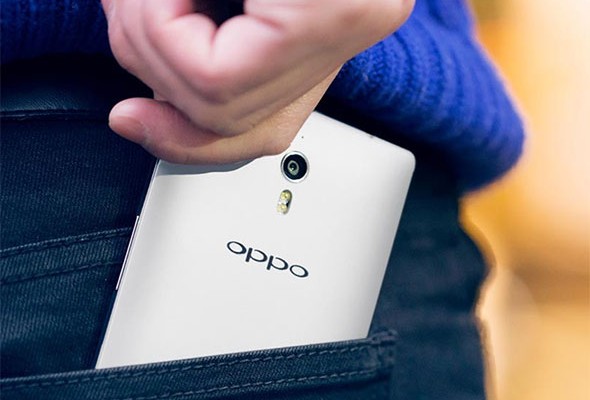
“Raise the Bar.” This is Oppo’s mission with their flagship for 2014, the Find 7. You probably haven’t heard of Oppo before, as they don’t exactly have a big presence in the U.S. and Europe. But, now is the time to start paying attention.
The headliner for the Find 7 has been the “50-megapixel camera,” and I want to clear this up. The device doesn’t actually have a 50-megapixel sensor onboard, but a 13-megapixel Sony IMX214 CMOS (the same sensor that is packed into the newly released OnePlus by One). Engadget reports that there is software packed into the Find 7 that makes 50-megapixel photos possible, dubbed Pure Image 2.0. The camera can take 10 shots very quickly and combines the first four images into a hefty 50-megapixel photo. And no, the camera doesn’t swivel like how it did on the Oppo N1, the company’s CyanogenMod-touting device. The IMX214 on board can also record video in 4K, joining the ranks of Samsung’s Galaxy Note III.
Specs-heads, the high-end Find 7 is your phone. A 5.5-inch IPS LCD display is onboard with an inane QHD (2560×1440), delivering a jaw-dropping 538 PPI. A snappy 2.5GHz Qualcomm Snapdragon 801 CPU is running the show, paired with 3GB of DDR3 RAM. It comes with 32GB of onboard storage, but this expandable via microSD all the way up to 128GB. The device also comes with LTE, 802.11ac WiFi, and a 3,000mAh juice pack. This premium model will cost $599 contract-free.
The lower-end model, called the Find 7a/Find 7 lite, costs a Benjamin less, at $499. But, fret not; the specs are still quite respectable. It will feature a 2.3GHz Qualcomm Snapdragon 800 CPU, a more modest and standard 1080p screen, 16GB of storage, and a slightly smaller 2800mAh.
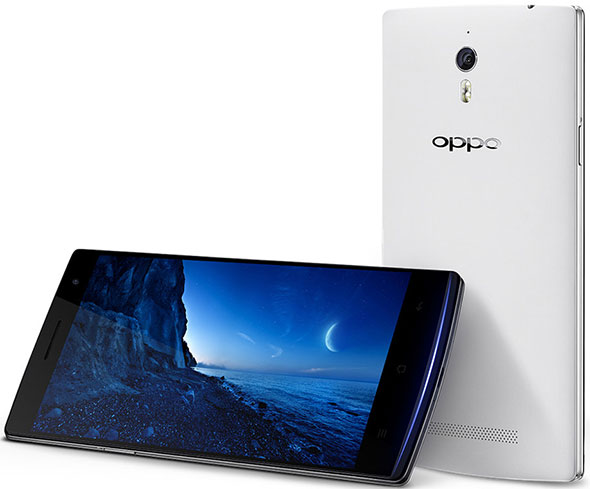
I’m a bit disappointed with the software, however. The Find 7 will run Android 4.3 Jelly Bean covered with Oppo’s domestic Color OS 1.2 skin, rather than the latest and greatest Android 4.4 KitKat. I feel as if Oppo missed an opportunity here to make the device quite a bit faster. KitKat has been quite a bit smoother than Jelly Bean in my experiences and the KitKat visuals are thoroughly modern and very clean looking. Hopefully a 4.4 update isn’t too far away, but I really wish it just ran KitKat out of the box.
The Find 7 also has some unique tricks up its sleeve. Color OS bring MaxxAudio which seems similar to Beats Audio that HTC previously put in their phones and VOOC battery charging tech. VOOC allows the phone to charge up to 75% full in just half an hour!
Oppo has cased the Find 7 with quite the design. The LED notification light, called Skyline Notification, looks absolutely breathtaking. Oppo hopes to push the Find 7’s build quality up to the top, with the likes of HTC and Apple, with five layers of thermal protective coating and a titanium-aluminum alloy frame. Despite the premium build, the phone is still relatively light at 171 grams and has a removable battery.
All in all, the Find 7 looks like on impressive smartphone. It will be available in limited stock this April, but should start hitting more markets in the May-June timeframe. Oppo is undoubtedly trying to break into the U.S. smartphone market, and with appropriate carrier availability, the Find 7 could certainly achieve that. Honestly, it looks more exciting to me than Samsung’s 2014 flagship, Galaxy S5 and most definitely has the potential to compete with the big boys of the smartphone world, like the next-gen iPhone and HTC’s All New One.
Oh yeah, and the Find 7 does make phone calls.
Source: Hot Hardware






| ASUS today announced that the Transformer |


Swiftech Announces New FlagShip Apogee XL CPU Waterblock. Long Beach, April 19,...


The GeForce GTX 760 Gets Unleashed Another week means yet another launch...

 jalebi Singh says:
 Justin Shepherd says: Justin Shepherd says:
 RUSTY DIXON says: