

AMD FX-9590 Kiss of Death? Last FX CPU From AMD?
It seems as though rumors are floating around causing speculation as...


Speeds And Feeds
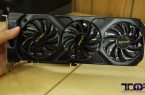
The GeForce GTX 780 features the same record-breaking GK110 GPU used in GeForce GTX TITAN so it’s no surprise to find out the card is very fast. To improve acoustics even further, NVIDIA has added a new fan control algorithm that provides a more stable fan speed. As a result, the GPU fan runs steadier, with less frequent variation in fan speed, resulting in even less perceived noise running at normal settings. So in a nutshell, NVIDIA has done their in-house custom fan tuning, which in turn will help your card work longer as well as ramp or idle as needed to keep your card running without fail.
Ready to kick ass, the GeForce GTX is made up of 12 SMX units providing 2304 CUDA Cores that make up the GPU’s primary powerhouse. The memory subsystem of the GeForce GTX 780 consists of six 64-bit memory controllers (384-bit) with 3GB of GDDR5 memory. The base clock speed of the GeForce GTX 780 is 863MHz. The typical Boost Clock speed is 900MHz which is based on the average GeForce GTX 780 card running a wide variety of and applications.

The GeForce GTX 780 comes clocked with a memory data rate of 6008MHz. The card breaks down to 12 Streaming Multiprocessors with 192 Texture Units 48 ROP Units. Total effective memory bandwidth is 288.4 GB/s, which is damn fast, but just wait for NVIDIA’s next release that pushes speeds beyond the envelope. One thing of note though, is that NVIDIA’s new BOOST 2.0 technology allows the voltage on the card to be manually adjusted for a more stable overclock. This also does ad a bit of risk due to the fact that too much of a voltage increase could result in an overheating and failing card. Overall the GeForce GTX 780 surpasses its predecessor the GTX 680 in almost every way and now we will have to put it on a test bed and see how it does in testing, but first lets talk a bit about gaming.



It seems as though rumors are floating around causing speculation as...

Slim gets an upgrade.
One of the top companies for
...
A lot of fans have been repeatedly asking about the “TRON” system...


Speeds and Feeds All variations of the new GeForce GTX 760 will...

 Arian Woldach says:
 nick sprenkels says: nick sprenkels says: